
Offshore & Onshore Company Bank Account Opening
Process, requirements, deadlines, and key differences
Opening a corporate bank account in another jurisdiction has long been standard practice and an important part of international business structuring. Choosing the right jurisdiction and bank helps companies securely process payments, manage currency, comply with regulations, and minimize regulatory risks. In this guide, we explain the differences between offshore and onshore accounts, review bank requirements, the steps involved in opening an account, typical timeframes and costs, and common reasons for rejection.
All Offshore Jurisdictions

Open Corporate bank account in British Virgin Islands
Learn More
Open corporate bank account in El Salvador
Learn More
Open corporate bank account in Panama
Learn More
Open Corporate bank account in Seychelles
Learn More
Open Corporate bank account in Costa Rica
Learn More
Оpen Corporate bank account in Saint Vincent and the Grenadines
Learn More
Open Corporate bank account in Bahamas
Learn MoreOverview of the corporate banking market
A brief explanation of how the corporate banking market for international companies works and what key factors determine the choice of bank and jurisdiction.
Comparative table of offshore banking jurisdictions
| A | B | C | D | E | F |
|---|---|---|---|---|---|
| Jurisdiction | Typical Positioning | Estimated Minimum Deposit | Average Account Opening Time | Level of Substance Requirements | Typical Use Cases |
| El Salvador | Emerging crypto-friendly banking jurisdiction | 5,000 – 20,000 USD | 5–9 weeks | Medium | Crypto businesses, fintech startups, cross-border service companies |
| Panama | Established international banking hub for LATAM structures | 10,000 – 50,000 USD | 4–8 weeks | Medium–High | Trading companies, logistics, holding and regional operating firms |
| BVI (British Virgin Islands) | Classic offshore jurisdiction for holding and asset ownership | 5,000 – 15,000 USD | 3–6 weeks | Low–Medium | Holdings, asset protection, international trading |
| Seychelles | Cost-efficient offshore option for small global structures | 3,000 – 10,000 USD | 4–7 weeks | Low | Small IT, consulting, digital service providers |
| Costa Rica | Stable LATAM jurisdiction with growing international banking offering | 7,500 – 25,000 USD | 5–8 weeks | Medium | E-commerce, export/import, nearshore service companies |
| Bahamas | Reputable offshore financial center with strong compliance | 25,000 – 75,000+ USD | 4–8 weeks | High | Funds, wealth management, family offices |
| SVG (Saint Vincent and the Grenadines) | Budget-friendly offshore option with limited banking access | 3,000 – 8,000 USD | 6–10 weeks | Low–Medium | Small trading companies, basic holding and invoicing structures |
Brief guidelines:
Types of banks: offshore banks, international onshore banks, local commercial banks
Key regulatory frameworks: FATF standards, AML/KYC, CRS/AEOI, local banking legislation
Typical opening time: 2 to 8 weeks depending on jurisdiction, complexity of structure, and quality of documents
Basic requirements: registered company, transparent ownership structure (UBO), business plan and description of operations, implemented AML/CTF procedures, proven source of funds and wealth
Short comparison: offshore and onshore corporate bank accounts
| Parameter | Offshore Bank | Onshore Bank |
|---|---|---|
| Primary Focus | International clientele, non-resident companies, cross-border payment flows | Local market, resident businesses, companies with physical economic presence |
| Substance Requirements | Often no need for a physical office or local staff | Office space, employees, local contracts, and tax nexus usually required |
| Payment Infrastructure | SWIFT, multi-currency accounts, sometimes non-IBAN formats | SEPA (for the EU), SWIFT, and domestic payment networks |
| Typical Account Opening Time | 3–8 weeks | 2–6 weeks |
| Minimum Deposit | Generally higher (USD 5,000–20,000+) | Lower (from USD 500–5,000) |
| Documentation Intensity | High, strong emphasis on UBO verification and source-of-funds evidence | High, with focus on substance, local operations, and business rationale |
| Typical Client Profile | Holding companies, trading firms, IT/SaaS businesses, e-commerce, family offices | Companies with domestic activity: production, services, retail, wholesale |
Regulatory and compliance environment
AML/CTF (anti-money laundering and counter-terrorist financing):
requirements for customer verification, transaction monitoring, and reporting suspicious activity.
KYC/CDD (know your customer/due diligence):
identification of the company, its beneficiaries, and business model.
FATF Recommendations:
an international standard on which countries base their AML regimes.
CRS/AEOI:
automatic exchange of tax information between countries.
PEP and sanctions screening:
verification of the involvement of UBOs and directors in public offices and sanctions lists.

Key features of offshore accounts:
willingness to work with companies whose beneficiaries and operations are located outside the bank’s jurisdiction;
developed SWIFT infrastructure and multi-currency accounts;
increased attention to the ownership structure, source of funds, and business model;
in some cases, the ability to open an account remotely without a personal visit.
Onshore bank account: when it is mandatory
office and employees in the country;
contracts with local suppliers and customers;
tax residency or registration;
link to local payment infrastructure (e.g., SEPA).
Whether you’re launching a project, opening a bank account, or structuring an offshore company!
Both offshore and onshore banks are required to comply with these rules. The difference, as a rule, lies in the level of tolerance towards foreign structures and the speed of decision-making.
Offshore banks focus on working with international structures, non-residents, and cross-border transactions.
They are often part of large financial groups or operate through a network of correspondent banks.
An offshore account is suitable for companies that manage global cash flows and are not strictly tied to one country.
Who needs an offshore account, and who needs an onshore account?
An offshore account is usually needed if:
- clients and counterparties are located in different countries;
- transactions are mainly conducted in foreign currencies (USD, EUR, GBP);
- the company is a holding, investment, or trading structure;
- a flexible multi-jurisdictional payment infrastructure is required.
An onshore account is required if:
- The company operates in a specific country and serves the local market.
- It is necessary to receive and send local payments with minimal fees.
- It is important to demonstrate substance to tax and regulatory authorities.
- CFC, economic presence, and local taxation requirements are taken into account.
In practice, many groups use a combined approach: onshore accounts for local operations and offshore accounts for managing international flows.
Key requirements and eligibility criteria
A registered legal entity with a clear ownership structure;
Transparent ultimate beneficial owners (UBOs) with a proven business reputation;
Financial stability and sufficient funds for the declared volume of operations;
A realistic business plan and description of the transaction model (countries, currencies, types of counterparties, average check, monthly turnover);
The presence of basic AML/CTF procedures within the company, especially when working with high risk;
No negative history with other banks and regulators.
Main categories of documents required to open a corporate bank account
| Category | Example Documents | Purpose for the Bank |
|---|---|---|
| Corporate Documents | Certificate of Incorporation, Articles of Association, Register of Directors/Shareholders, Certificate of Good Standing, Tax Identification Number | Verification of the company’s legal existence, governance structure, and ownership |
| Personal Documents | Passports of UBOs and directors, proof of address, CVs, bank reference letters | Assessment of the integrity, background, and residency of key individuals |
| Operational Documents | Business plan, business model description, contracts, invoices, turnover projections | Understanding of actual business activity and the transaction model |
| Substance Documents | Office lease agreement, employee information, local bank accounts, tax registrations | Proof of economic presence (critical for onshore banks) |
| Source of Funds / Source of Wealth Documents | Asset sale contracts, dividend statements, financial statements, evidence of accumulated savings | Justification of the origin of capital and funds incoming to the account |
Step-by-step process for opening an account: offshore and onshore
Offshore account: step by step
For offshore banks, the quality of the initial dossier and the clarity of the business model are particularly important.
- Project analysis and jurisdiction selection At this stage, business objectives, currencies, key markets, and banking requirements are determined. The selection of jurisdiction takes into account country risk scores, the level of regulatory pressure, and the available payment infrastructure.
- Preparation of corporate structure If necessary, the company is registered, the ownership structure is formed, corporate documents are drawn up, and, if necessary, basic substance is provided.
- Collection and preparation of documentation Corporate, personal, and operational documents are prepared. When working with offshore banks, notarization and apostille are often required.
- Pre-approval The company profile is sent to the bank for preliminary assessment. At this stage, the bank confirms whether it is willing to consider such a structure in principle.
- Formal signing of forms and KYC/AML compliance Bank questionnaires are filled out, a video conference or interview is held, and the bank clarifies the details of the business model and sources of funds.
- Initial deposit and account activation After approval, the bank requests an initial deposit, sets up online banking, and connects payment channels.
Onshore account: step by step
For onshore banks, substance and ties to the local economy play a key role.
- Choosing a bank and account type The requirements of specific banks are assessed, including their willingness to work with foreign beneficiaries, the availability of online banking, and corporate services.
- Preparing a complete set of documents In addition to the standard set, confirmation of office rental, employee hiring, local contracts, and tax status is often required.
- Submitting documents and preliminary assessment The bank conducts KYC/CDD and assesses the company’s risk profile. At this stage, it is usually determined whether there is sufficient substance and whether the activities are clear.
- In-person or remote identification In some countries, the director or UBO must visit the branch in person. In other jurisdictions, video identification is permitted.
- Conclusion of a banking service agreement Agreements, FATCA/CRS forms, and confirmations of sanctions and PEP checks are signed.
- Account activation and connection to the payment infrastructure After the account is activated, the company gains access to local payment systems (SEPA, national clearing systems) and SWIFT.
Remote vs In-Person Account Opening
The possibility of opening an account remotely depends on both the bank’s policy and the regulator’s requirements. If the company structure is simple and the owners reside in low-risk countries, many offshore banks are willing to conduct a full remote KYC.
Sometimes a personal visit is still required. This applies to high-risk industries, PEP status of owners, complex ownership structures, or the requirements of a specific jurisdiction. Onshore banks are particularly strict about in-person identification, as their legal connection to the state is critical.
Thus, the format of opening an account depends on a combination of factors: the company’s risk profile, local regulations, internal procedures, and the nature of its activities.
Estimated time and costs for opening a corporate account
| Element | Offshore Corporate Account (Typical Range) | Onshore Corporate Account (Typical Range) | Comment |
|---|---|---|---|
| Company Formation (if required) | 1,500 – 3,500 USD | 1,000 – 3,000 USD | Depends on the jurisdiction and ownership structure |
| Compliance Package Preparation & Support | 3,000 – 8,000 USD | 2,000 – 6,000 USD | Includes business plan, AML/KYC policies, and business model description |
| Bank Application/Review Fees (if applicable) | 500 – 2,000 USD | 0 – 1,500 USD | Some banks charge a fixed fee for processing the application |
| Minimum Deposit | 5,000 – 20,000 USD and above | 500 – 5,000 USD | There may be minimum balance requirements |
| Estimated Approval Timeline | 3 – 8 weeks | 2 – 6 weeks | Provided the documentation package is complete |
| Annual Maintenance Costs (Substance, Compliance) | from 3,000 USD per year | from 2,000 USD per year | Includes accounting, reporting, and local service providers |
Rejection Reasons
Most rejections are not due to formal violations, but rather to insufficient transparency or internal doubts on the part of the bank regarding the applicant’s stability. If the ownership structure is too complex, the sources of funds are not confirmed, or the business model appears incomplete, the bank is more likely to reject the application than to take on the risks.Most rejections are not due to formal violations, but rather to insufficient transparency or internal doubts on the part of the bank regarding the applicant’s stability. If the ownership structure is too complex, the sources of funds are not confirmed, or the business model appears incomplete, the bank is more likely to reject the application than to take on the risks.
Common reasons for rejection include negative records on key individuals, links to high-risk jurisdictions, lack of substance for onshore accounts, contradictions in documents, weak operational logic, and lack of licenses in regulated sectors. In some cases, the bank does not disclose the reasons, but analysis of internal materials almost always allows you to determine which elements caused doubts.
Advantages of a well-developed banking strategy
Optimized payment chains and reduced transaction costs;
increased trust from partners, investors, and regulators;
better management of currency and legal risks;
predictability in working with banks and reduced likelihood of blockages;
readiness for international tax changes (CRS, CFC, substance requirements).
Why you should work with Gofaizen & Sherle
Business model analysis and jurisdiction selection. We assess the company’s goals, customer geography, and risk profile to offer realistic, rather than theoretical, options.
Preparation of the company structure. We help build a transparent ownership structure and, if necessary, ensure economic substance.
Preparation of a complete set of documents for the bank. We develop a business plan, descriptions of the transaction model, compliance policies, and explanations for bank officers.
Communication with the bank. We accompany you through the pre-approval and KYC/AML interview stages, respond to requests, and help you correctly argue your position.
Post-opening and support. We support you with KYC update requests, structural changes, and scaling operations.
FAQ on offshore and onshore corporate bank accounts
Does a company need an account in the country where it is registered?
Not always. Holding companies and international structures often hold accounts in other jurisdictions. However, for onshore companies operating in a specific country, a local account is usually required.
Is it possible to get by with only an offshore account?
Sometimes yes, if the business is entirely international and not tied to a specific local market. But to comply with substance and CFC rules, at least one onshore element is often required.
How long does it take to open a corporate account?
On average, it takes 2 to 8 weeks. The timeframe depends on the jurisdiction, the bank, the complexity of the structure, and the quality of the prepared dossier.
How critical is UBO transparency?
It is one of the main factors. Banks are extremely sensitive to attempts to hide beneficiaries or complicate the structure without economic logic.
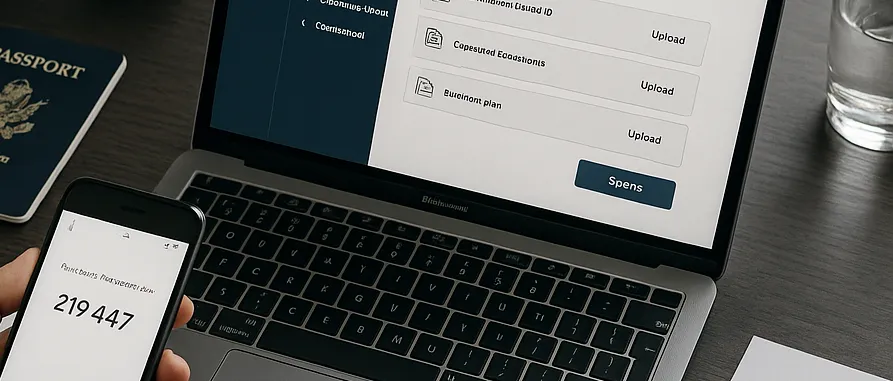
Is it possible to open an account entirely remotely?
For a number of offshore and certain onshore banks, yes. However, many onshore banks still require a personal visit from the director or UBO.
What happens if a bank refuses to open an account?
Usually, the decision is final, and the bank does not disclose the full motivation. In such cases, it is important to analyze the reason for the refusal (structure, jurisdiction, UBO, activity) and adjust the approach before contacting other banks.
Can Gofaizen & Sherle help at all stages?
Yes. We accompany clients from planning and choosing a jurisdiction to successfully opening accounts in offshore and onshore banks, and we also help build a sustainable compliance model for long-term service.
